
Wildlife Photography on Your Polar Bear Tour
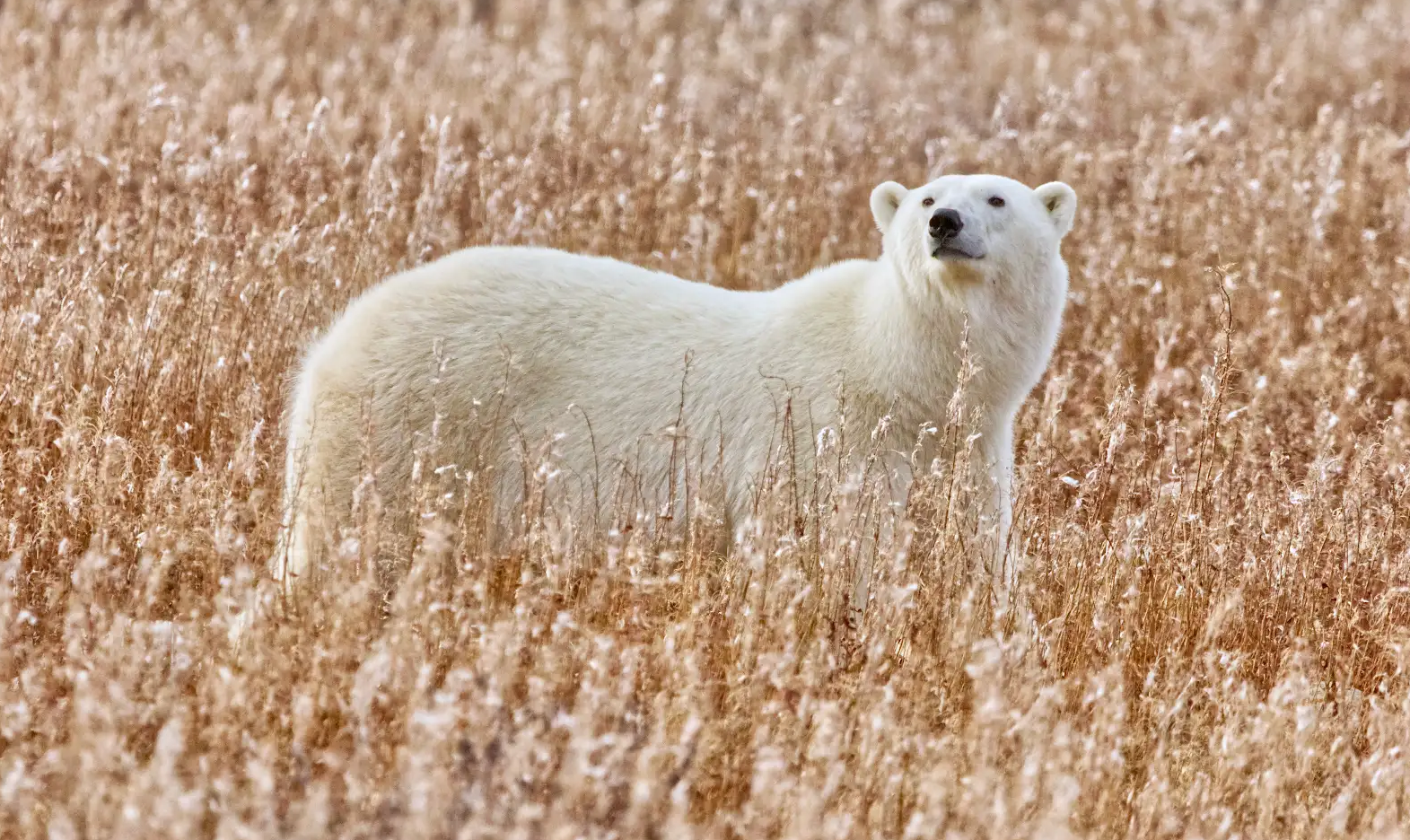
A Polar Bear in the wilderness of Manitoba
The Churchill Wildlife Management Area is a stunning 854,484-hectare protected area that contains critical tundra habitat for migrating polar bears. While exploring this vast landscape on your One-Day Polar Bear Tour, you will be greeted with unique opportunities to photograph the wildlife of northern Canada. Here are some helpful hints when preparing to photograph in Churchill.
A Wild Ride
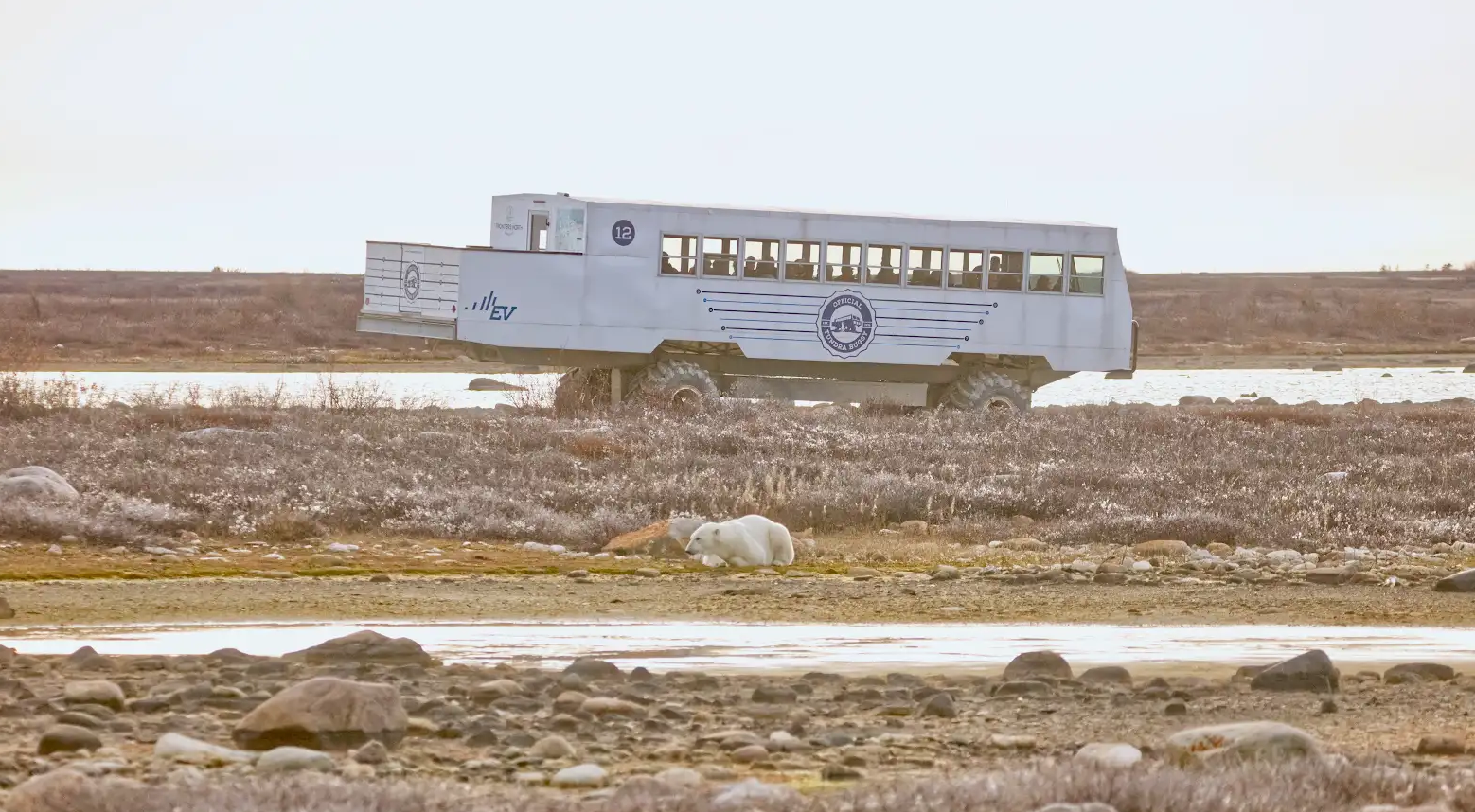
Polar Bear and Tundra Buggy
To access the rugged tundra landscape, we will be riding on Tundra Buggies. These purpose-built, all-terrain vehicles feature an elevated platform, providing clearance for exploring the rocky shores of the Hudson Bay while also keeping you out of reach of towering 3-meter-tall standing polar bears. From this elevated viewpoint, you can take in panoramic vistas and capture unique photos.
Meet the Bears
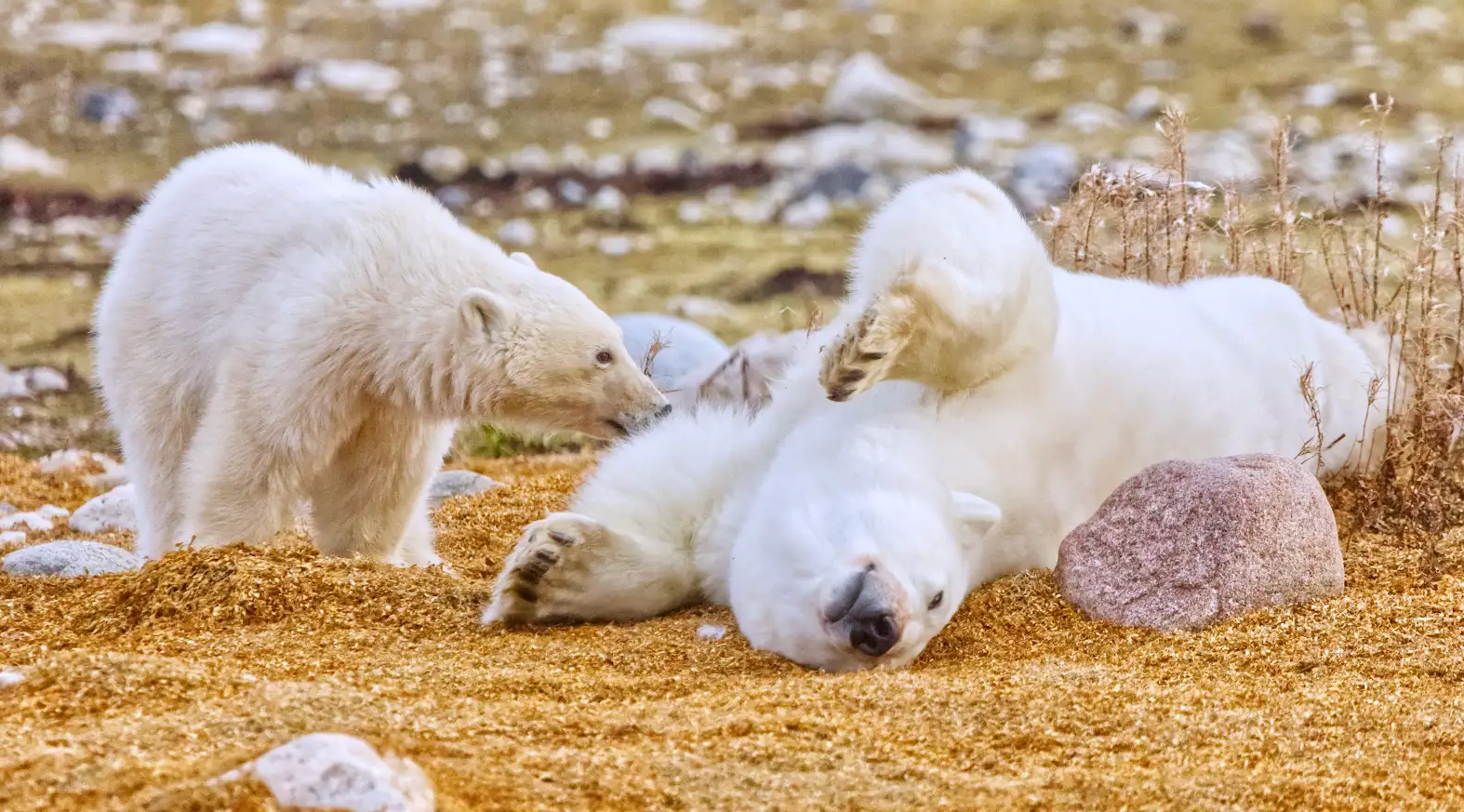
A polar bear stretching alongside her cub
Churchill is aptly nicknamed the “Polar Bear Capital of the World,” thanks to the hundreds of polar bears that inhabit the western Hudson Bay area. When we visit in the autumn, the bears are preparing to venture onto the sea ice to hunt for seals and other marine animals throughout the winter.
When watching polar bears, we’ll be observing many fascinating behaviours. Some bears may have young with them, allowing for an intimate look at polar bear family dynamics. Large male bears may spar and show off their strength. Other, more subdued bears may rest their head on the moss for a nap. Some curious bears may even approach the Tundra Buggy to see what we humans are up to.
Beyond the Bears
Alongside our beloved polar bears, you may also spot other animals. Mammals, like Arctic foxes and Arctic Hares, bound through the rocky terrain while diminutive Arctic Shrews and Richardson’s collared lemmings sneak through the tundra vegetation.
Birds are some of the more frequently seen animals. The Churchill region is home to over 175 bird species throughout the year. Photogenic migratory birds in autumn include Snow Buntings, which flock together in search of seeds, and Brants, which rest and feed along the bay on their southward migration. Resilient year-round staples include the iconic Willow Ptarmigan and the widespread Common Raven.
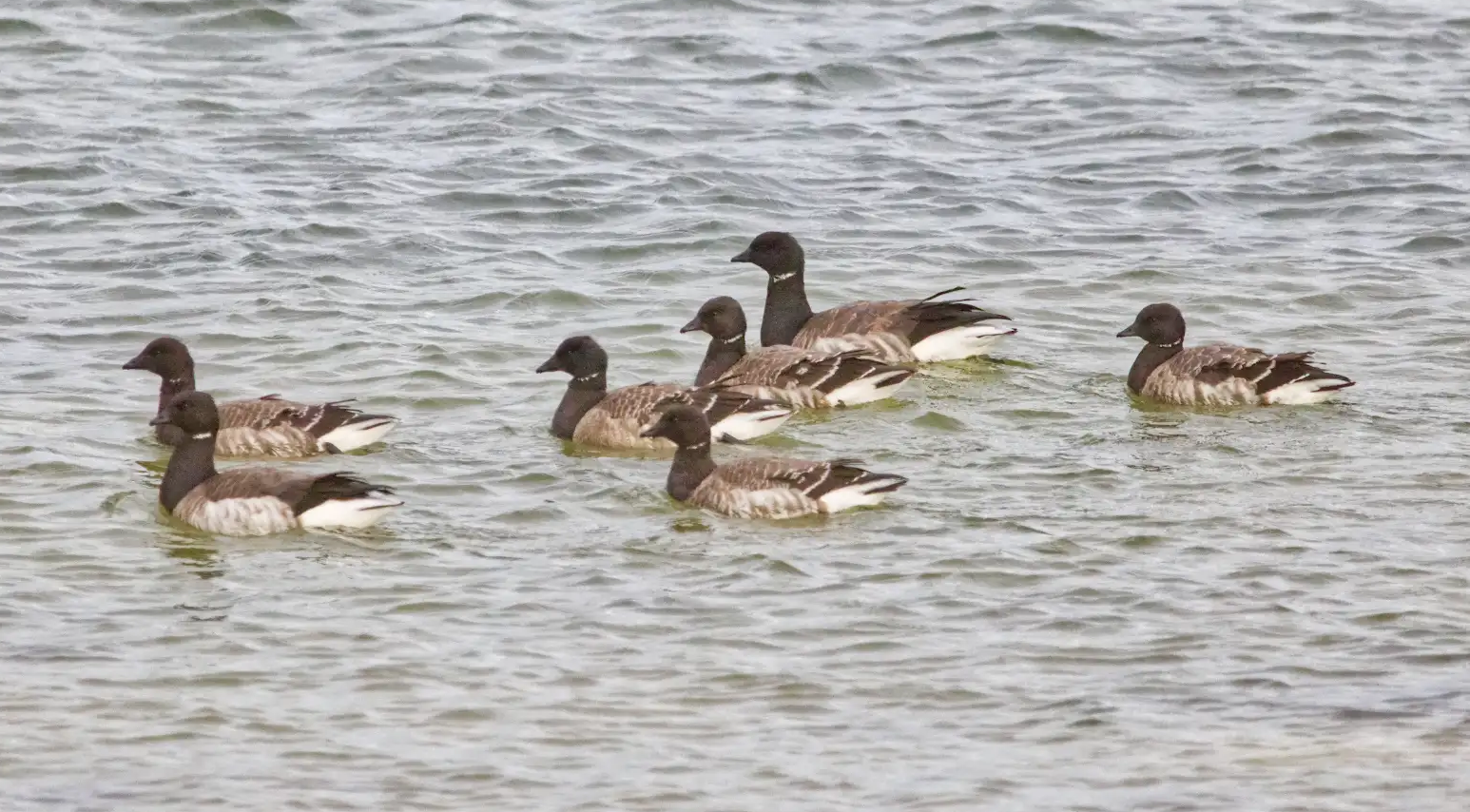
Brants in the waters of the Hudson Bay
Besides animals, Churchill is also home to an array of cold-hardy plants. In autumn, dried wildflowers and shrubby willows dot the landscape. Persistent winds sculpt stunted spruce trees into captivating Krummholz formations andflag trees with branches missing on the windward side.
Photography Tips
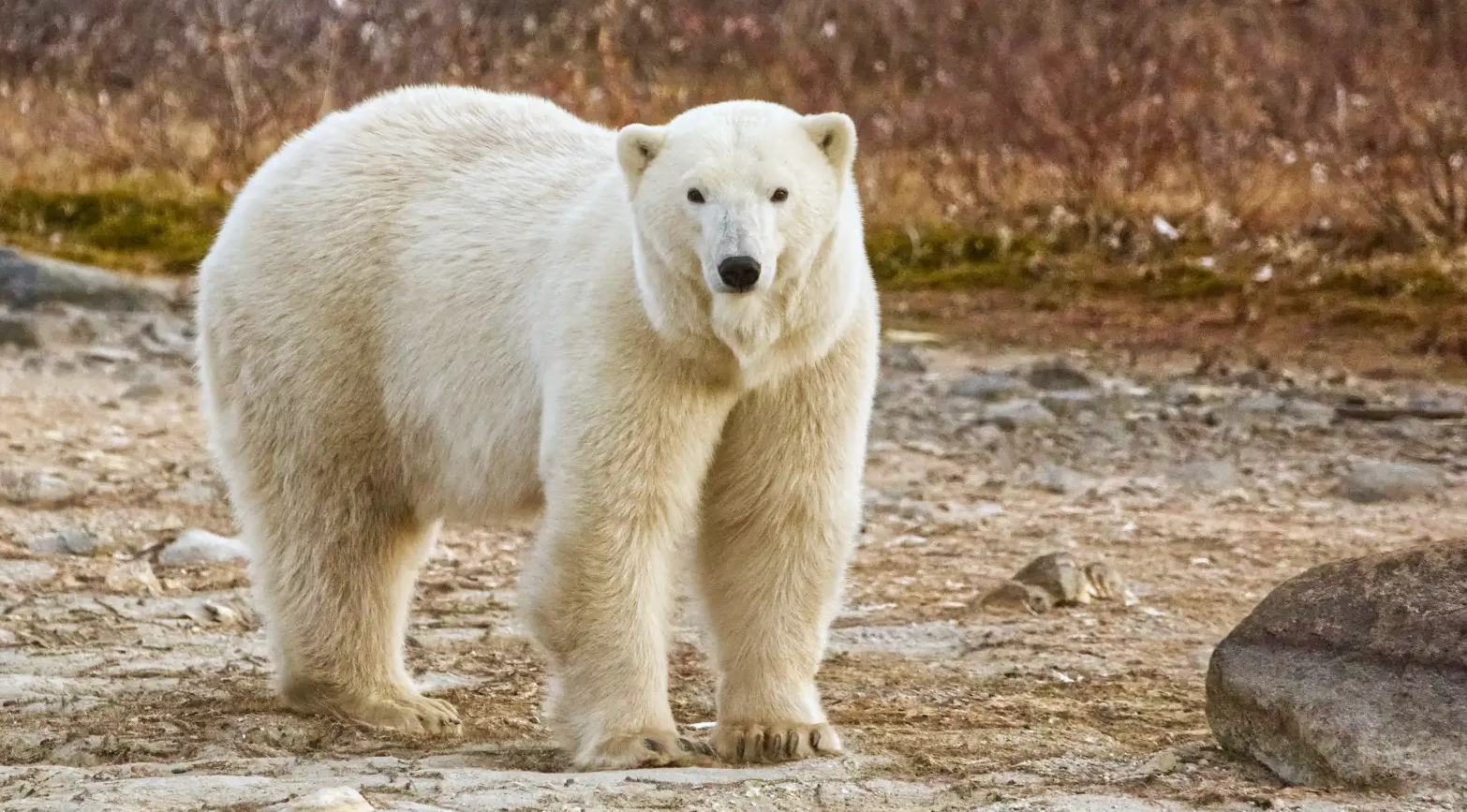
A polar bear near Churchill, Manitoba
The expert drivers of the Tundra Buggies will do a grand job of spotting bears and parking as close as is reasonable. While some curious and relaxed bears may permit views from mere meters away, other sightings will be far off in the distance.
To capture up-close views of polar bears, a telephoto lens is essential. Zoom lenses, with adjustable focal lengths, are excellent for capturing a variety of compositions, both near and far.
On the Tundra Buggy, you will remain seated while the vehicle is in motion, but you are encouraged to get up and go out on the open deck once the Buggy is parked in a prime bear viewing position. The parked Buggy does wiggle a little as people move about excitedly, so image stabilisation is useful for catching the sharpest shots. Space onboard is limited, so a tripod or monopod is not a feasible option.
At the high latitude of Churchill (58.77° North), the Sun is fairly low to the horizon, peaking at roughly 20° in late October and only 13° by mid-November. The low-angle sunlight and early sunsets can create a challenge for lighting, but they also provide a great opportunity for golden-hour polar bear portraits as the evening rolls in. Be prepared to adjust your exposure and aperture to the changing lighting conditions, as clouds are a frequent sight.
As we will be out on the Tundra Buggies all day long, it is strongly recommended to wear a comfortable camera strap and bring plenty of extra batteries and memory cards. There is no onboard electricity for charging devices, so a power bank or spare batteries are must-haves, especially if conditions are cold.
For keeping hands dexterous and warm in the chilly Churchill wind, photography gloves are a handy accessory.
My gear for the day included my trusty old Canon 5DS and a Sigma 150-600mm f/5-6.3 DG OS HSM lens. This setup allowed for good flexibility in focal lengths, letting me adjust between close-ups and somewhat wider scenic views. The lens has good image stabilisation to help compensate for my motion. Combined, this setup weighs around 3,030 grams, which is not overly heavy for a long-duration wildlife photoshoot.
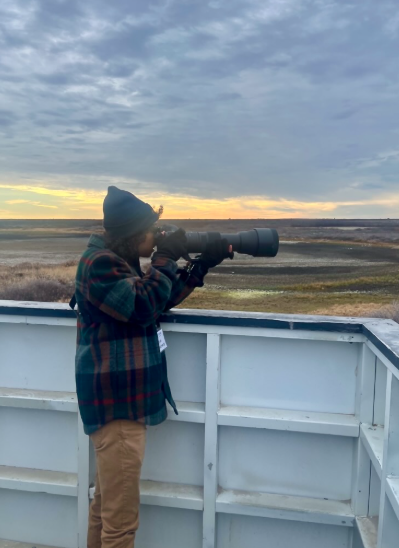
Be sure to bring a camera along for your unforgettable One-Day Polar Bear Tour. It’s an amazing photography opportunity that you won’t want to miss!
Until next time,
Joel Weatherly, Wildlife Photographer
