
Night Sky Highlights in September
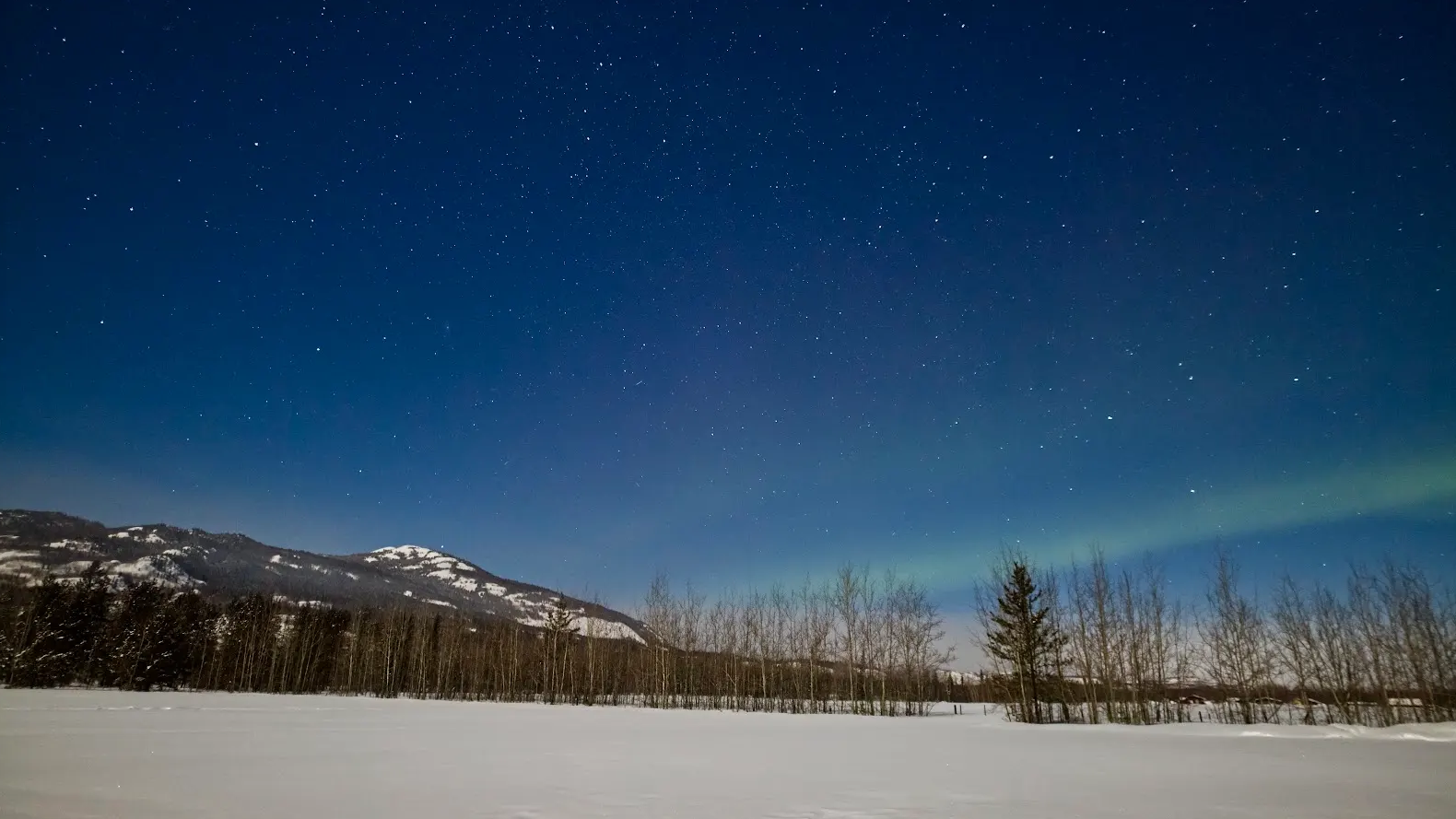
Auroras meet the mountains near Whitehorse.
While chasing auroras in the Yukon, it’s hard not to appreciate the pristine dark skies and take a moment to enjoy some other night sights. When pursuing auroras on the September four-day, three-night Whitehorse Northern Lights Tour, we were on the look for these astronomical sights.
Solar System Selections
In late summer to early autumn, Saturn takes centre stage. The ringed planet will be a convenient naked-eye planet rising around 9:20 PM Mountain Time each night and remaining visible for the remainder of the night. While most famous as a telescope sight, thanks to those iconic rings, Saturn is also a lovely planet to catch with just the unaided eye, as it sports a subtle yellowish hue.
The only other naked-eye planet that will be out at the same time as our intrepid aurora chasers is Mars, the red planet. Mars rises around 12:45 AM and will be showing up earlier each night as it approaches opposition (when it is opposite the Sun in our skies) in early 2027. Mars’ signature reddish-orange hue is a striking sight with the unaided eye and in photographs.
Other bright planets may evade our view as they appear in the early evening or morning. Jupiter will rise around 4:00 AM.
The Moon will reach its third quarter phase on September 4, meaning it rises later at night and causes minimal interference with aurora viewing. The thinning crescent Moon will swing past Mars on September 6, providing an opportunity to see Mars and the Moon in conjunction as a dynamic duo.
If you have binoculars, a telephoto lens, or a telescope, you may even spot the faint planet Uranus as it lurks near the heart of Taurus or the even fainter Neptune joining Saturn in Pisces.
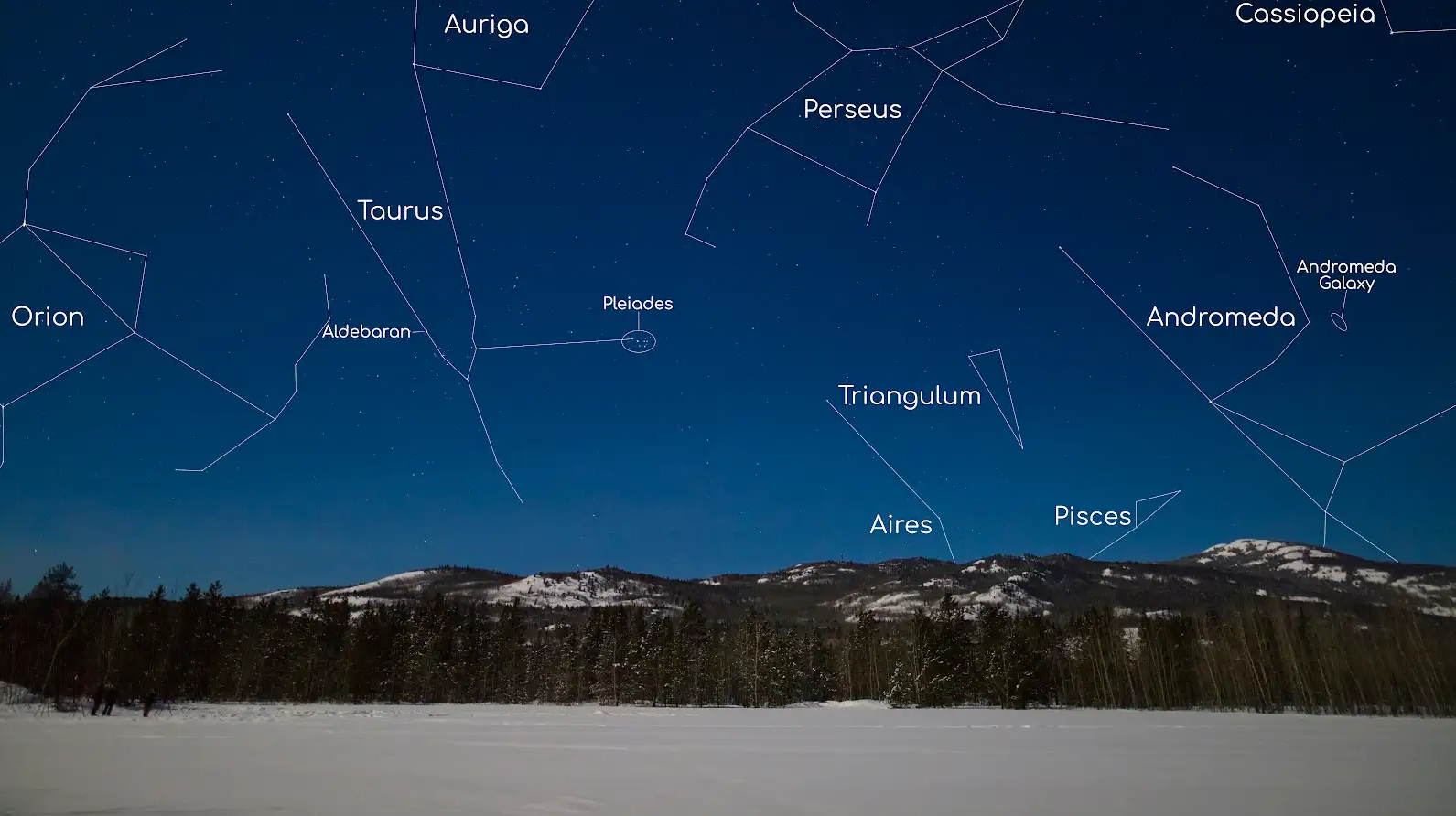
An annotated view of the night skies in Whitehorse.
Stellar Sights
Taurus “the bull” will be a particularly eye-catching constellation in eastern skies. As it clears the horizon around midnight, look for the red giant star Aldebaran “the follower”, trailing behind the Pleiades (aka “The Seven Sisters,” “Subaru,” or Messier 45), a popular open cluster. The Pleiades is among the easiest star clusters to spot with the unaided eye and is a welcome sight for stargazers as it heralds our lengthening nights. The Moon will be to the left of the horns of Taurus, tipped by the stars Elnath and Tianguan, on the night of September 4, making the constellation a bit easier to find.
While looking to the north for the northern lights, it will be hard to miss one of the most famous constellations of all, Ursa Major “The Great Bear”, as it patrols the northern sky all night long. Within this bear lies the “Big Dipper,” a popular asterism. The two stars forming the edge of the dipper’s bowl, named Dubhe and Merak, are also useful to find. By extending the imaginary line between these stars upwards, you will be led to Polaris “The North Star”, which forms the end of the “Little Dipper’s” handle or Ursa Minor’s “The Little Bear” tail.
While waiting for the auroras to put on the show of a lifetime, be sure to scan the skies for an assortment of other sights.
Wishing you clear skies,
Joel Weatherly
