
Northern Night Sky Highlights in March
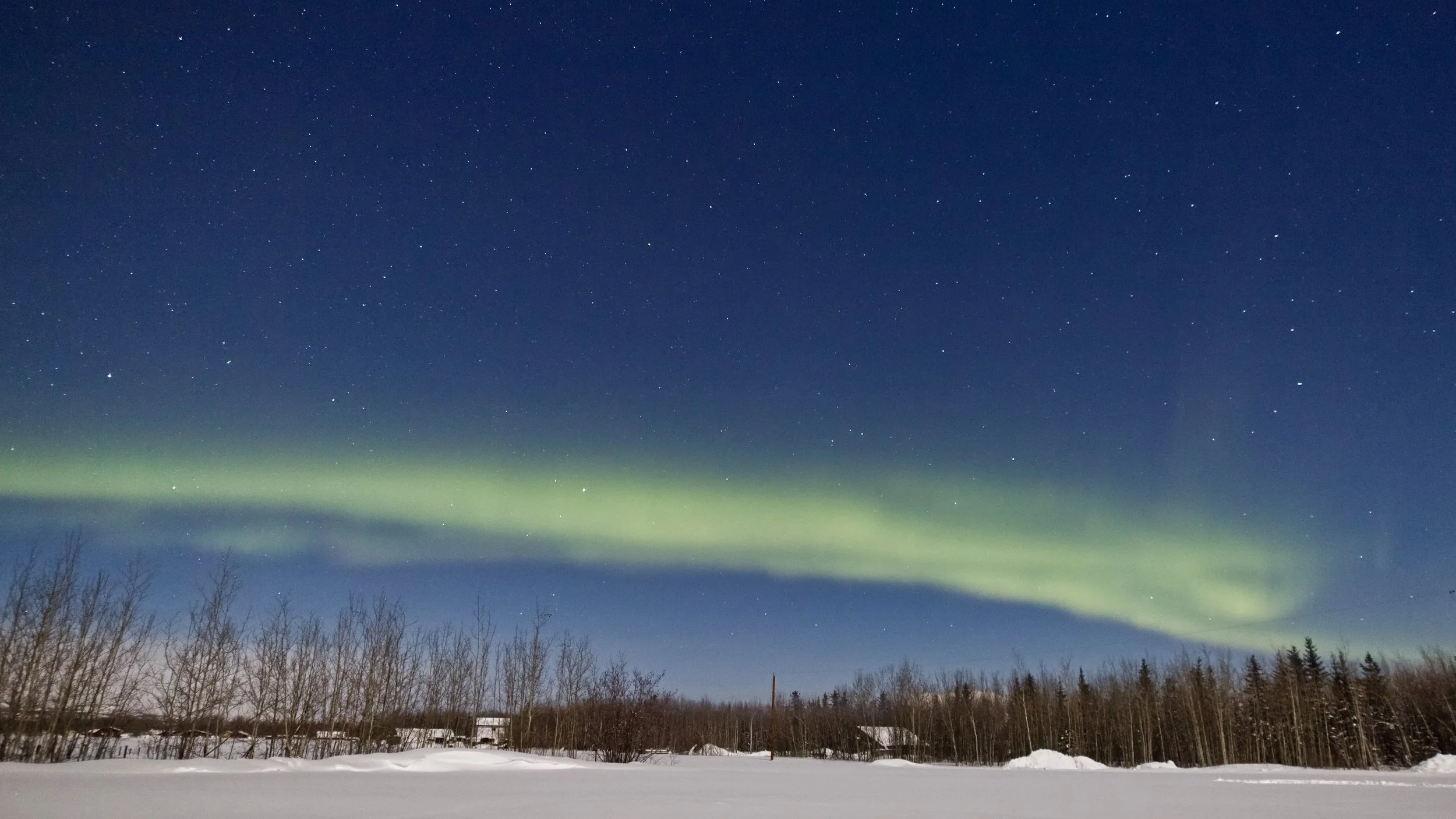
While chasing auroras in the Yukon, it’s hard not to appreciate the pristine dark skies and take a moment to enjoy some other night sights. When pursuing auroras on the March 4-7 and March 25-28, 2027, four-day, three-night Whitehorse Northern Lights Tours, be sure to look for these out of this world sights.
Solar System Selections
Mars will be the most noteworthy planetary sight in early 2027, as it will be at opposition (when it sits opposite the Sun in out skies) on February 19, 2027. When viewing Mars in March, the Red Planet will be visible virtually all night long. As Mars will be relatively close to Earth at a mere 104 million kilometres away, it will be a striking sight, showing off its reddish-orange hue.
Alongside Mars is an even brighter planet, Jupiter. Jupiter also reaches opposition in February and remains a brilliant all-night sight in March. Mars and Jupiter will be a dynamic duo to the unaided eye as these bright planets trek across the southern sky.
Saturn will be visible shortly after sunset, but will set below the horizon before we head out for aurora chasing.
If you are awake to enjoy the sunrise, you might just catch the waning crescent Moon rising too. While you’re out aurora chasing in early March, the Moon will be rising late in the night or early morning, meaning that little moonlight will obscure your aurora viewing. Joining the Moon in the morning and daytime skies are the interior planets, Venus and Mercury.
If you have binoculars, a telephoto lens, or a telescope, you may even spot the faint planet Uranus as it slowly drifts through the constellation Taurus, “the bull”.
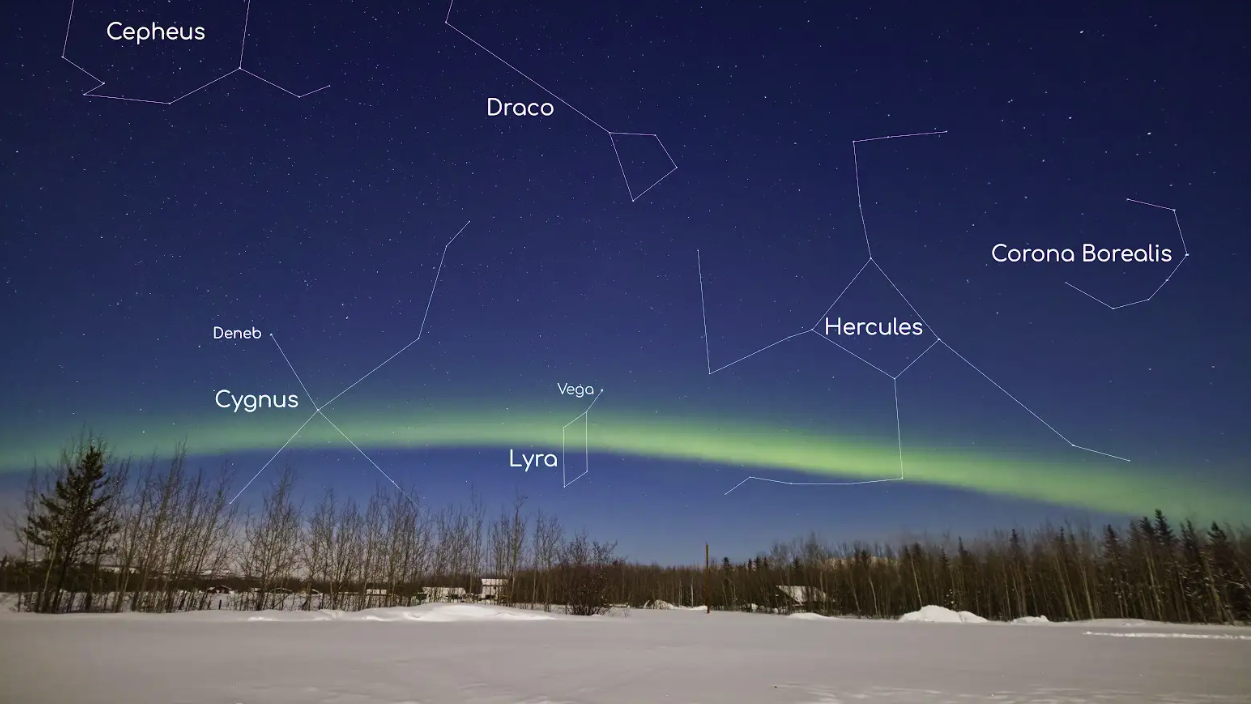
Stellar Sights
While watching the northern skies for the northern lights, you might catch a preview of our summer nights as two members of the Summer Triangle, Deneb and Vega, begin to rise earlier and earlier each night. These two bright stars are the foundations of their respective constellations of Cygnus “the swan” and Lyra “the lyre.” The third bright star of the Summer Triangle, Altair of Aquila “the eagle,” will complete the Summer Triangle in the early morning skies as it rises around 4:00 AM.
If you’re enjoying the pairing of Jupiter and Mars, be sure to scan their starry background for the constellation Leo. Leo “The Nemean Lion” is a popular winter zodiac constellation as it hosts the bright star Regulus, which can be found to the lower left of Mars in early March.
While waiting for the auroras to put on the show of a lifetime, be sure to scan the skies for an assortment of other sights.
Wishing you clear skies,
Joel Weatherly
