
Wildlife Photography on your Grizzly Expedition
Written by: Joel Weatherly, Wildlife Photographer
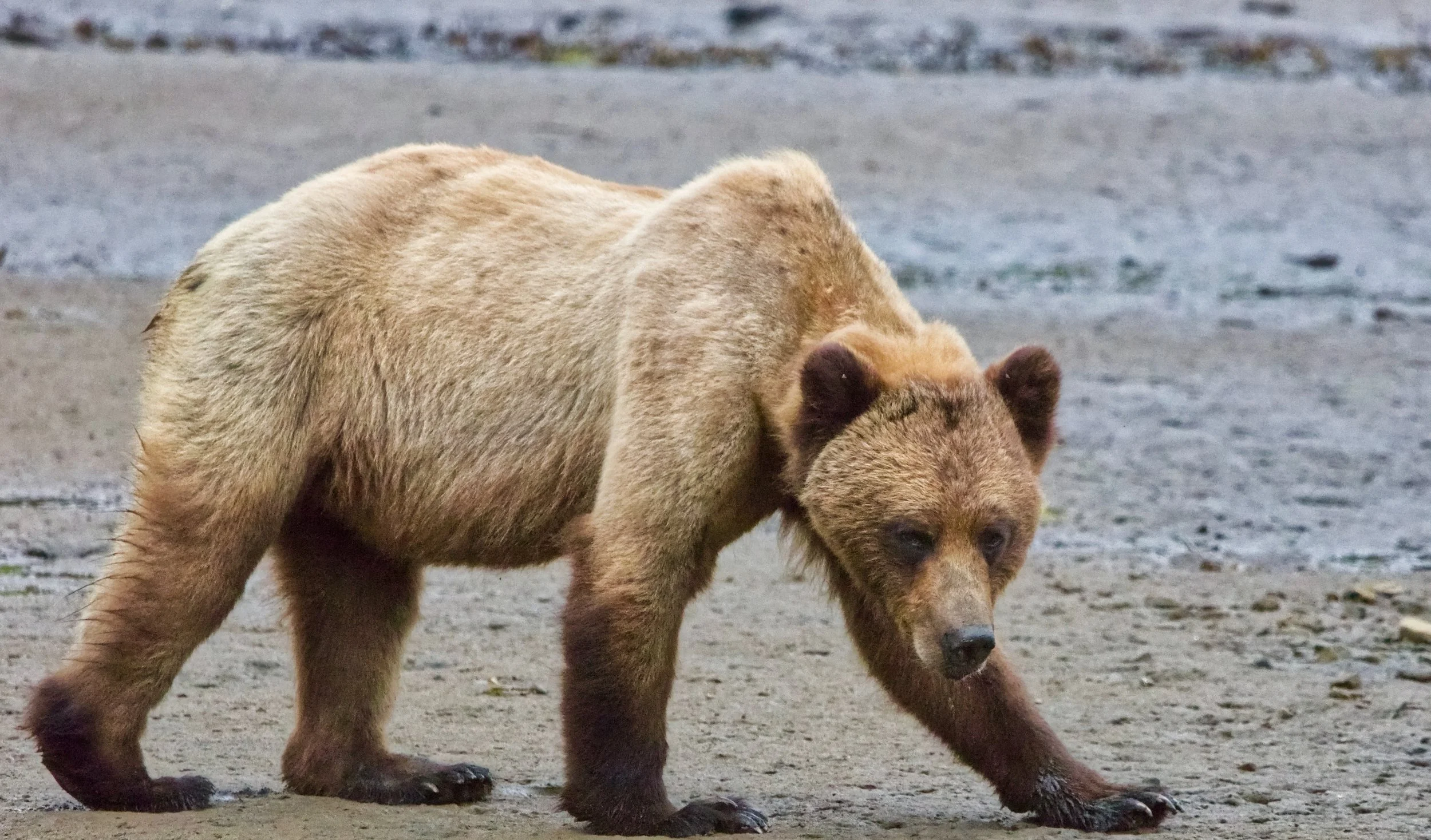
A grizzly bear searching the shores for clams and mussels.
The Khutzeymateen/K'tzim-A-Deen Grizzly Sanctuary is a spectacular park along British Columbia’s North Coast. Covering 45,052 hectares of pristine nature, the park contains the world’s largest continuous forest of old-growth Sitka spruce, forming a perfect habitat for grizzly bears and a myriad of other animals. To protect this precious ecosystem, the Khutzeymateen inlet is only accessible by water. As we venture into this sanctuary on board a catamaran, we are treated to some exceptional opportunities for wildlife photography.
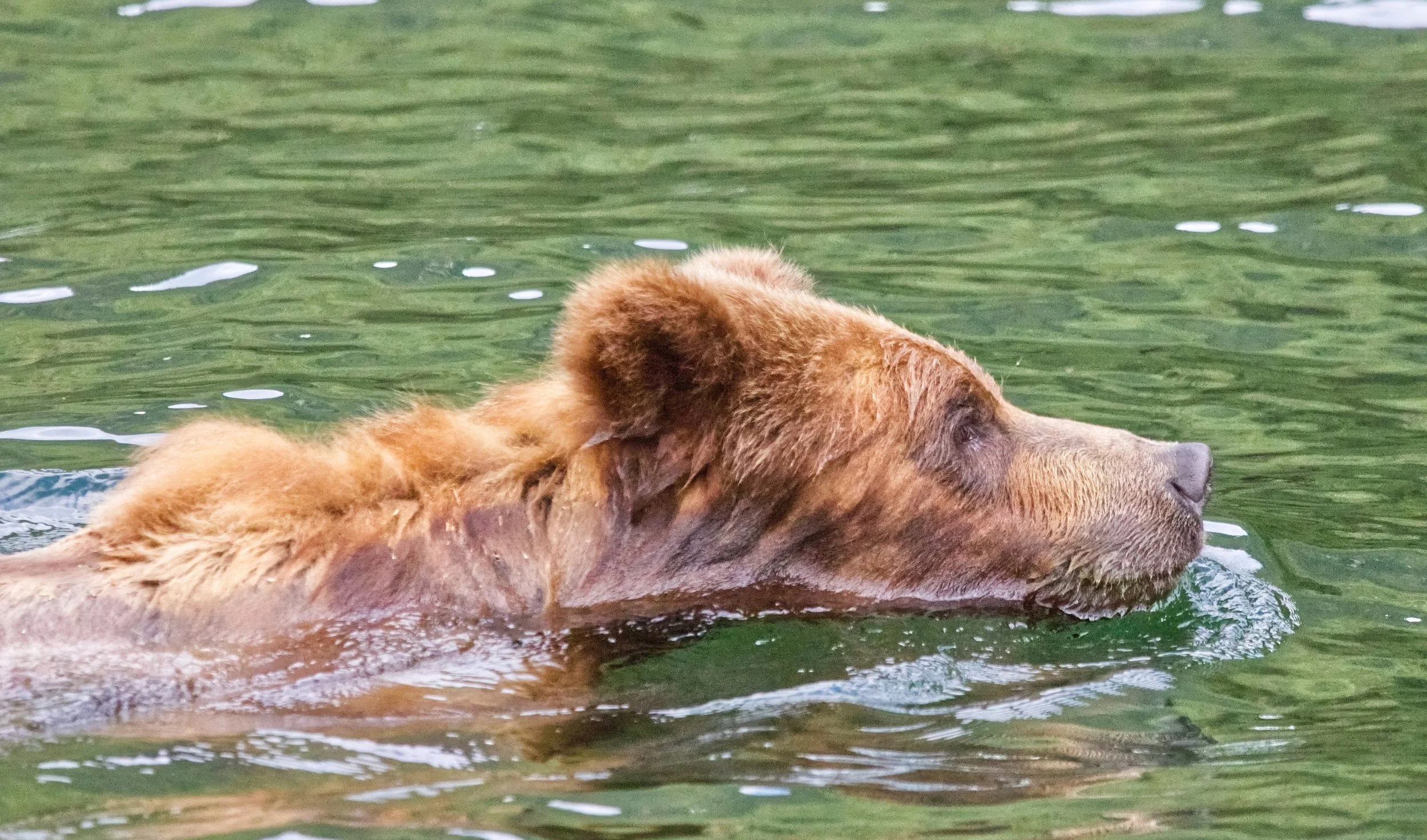
A grizzly bear swimming across the Khutzeymateen inlet.
Bear Behaviours
Opportunities to photograph the Khutzeymateen’s iconic grizzly bears are variable and exciting. As we visit in the spring and summer, these bears are working to regain mass after a sedentary winter, and they are frequently seen eating. This pursuit of food often brings them down to shore to feed on sedge meadows and marine animals. When visiting last June, we were treated to many individual grizzly bears, each displaying unique behaviours. Among the highlights were a mother and cub eating sedge, bears digging up clams and mussels, and even a bear swimming across the inlet before climbing up a rocky shore.
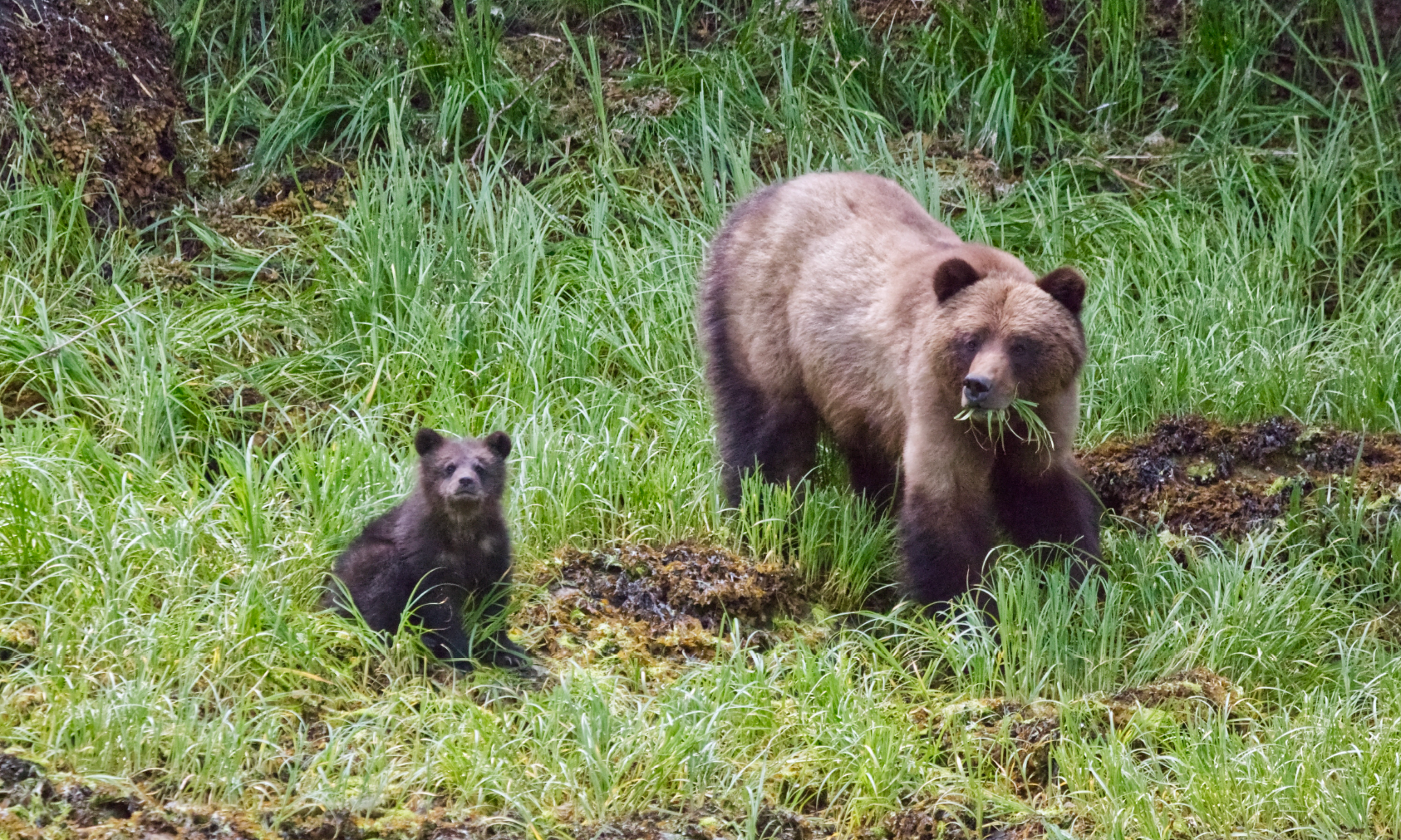
Mother grizzly bear Hot Chocolate and her 5-month old cub Mocha.
Photography Tips
The expert captains and crew members of the catamaran do a wonderful job of spotting distant bears and manoeuvring as close as reasonably possible, but to capture details, you’ll want to zoom in.
A telephoto lens with a long focal length is a essential for getting up-close shots of bears in action, revealing their facial expressions, mouthfuls of sedge, and insulating fur. One challenge with photography when using a long telephoto lens on a moving vessel is that you are constantly in motion which easily results in blurry photos. As space is limited, a tripod is not an option. Instead, I rely on image stabilisation and a fast shutter speed to reduce image blurring.
Additionally, as we spend several hours cruising along in search of grizzlies, selecting a camera and lens that are a comfortable to hold and possess a manageable weight is important. A good camera harness goes a long way to keeping your shoulder comfortable, but eventually, you will start to feel the weight of the camera.
With modern DSLR, mirrorless, and bridge cameras, there are many excellent options for zoom and prime lenses that provide a good compromise between focal length, image stabilisation, and weight. My gear for the day included my trusty old Canon 5DS and a Sigma 150-600mm f/5-6.3 DG OS HSM lens. This setup allowed for good flexibility in focal lengths, letting me adjust between close-ups or somewhat wider scenic views. The lens has good image stabilisation to help compensate for my motion. Combined, this setup weights around 3,030 grams, which is not overly heavy for a long-duration wildlife photoshoot.
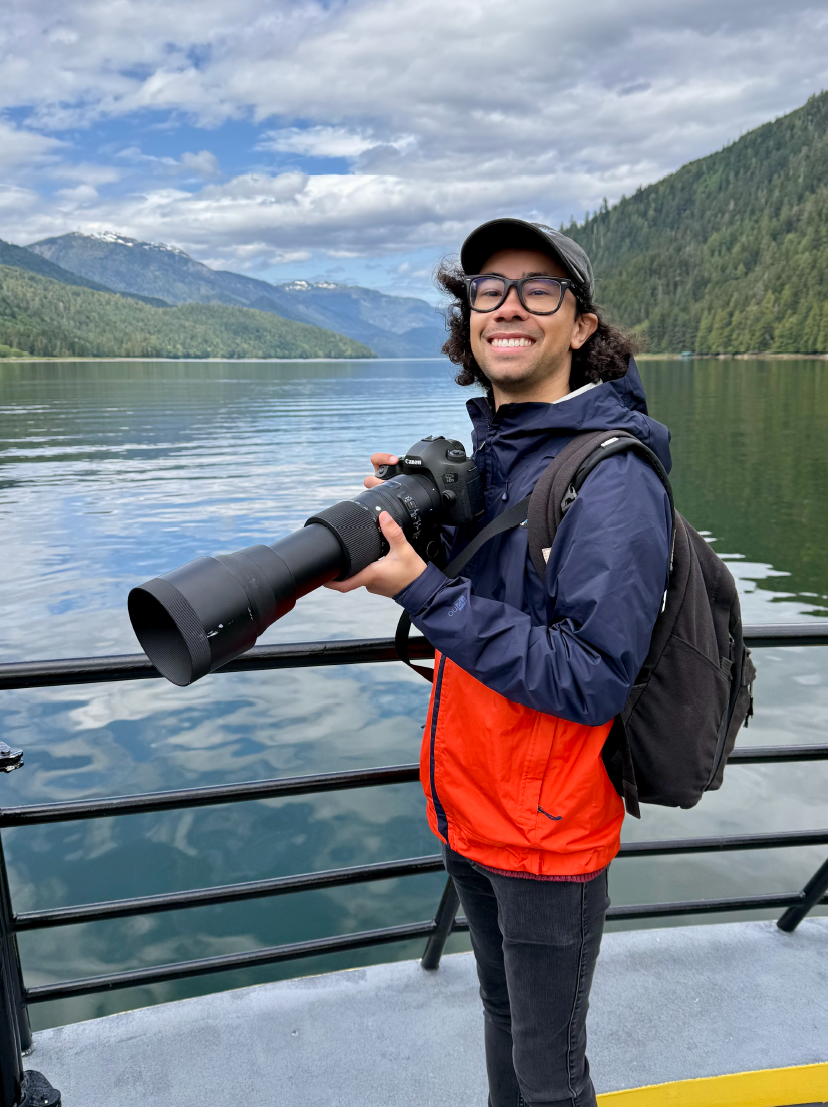
What to Pack
Besides a good camera and lens, you’ll want to bring lots of batteries and memory cards. Memory cards fill up fast when photographing hours of awesome sightings. While the catamaran offers excellent comfort and views, it lacks power outlets, so bringing extra batteries or a power bank is essential.
Even without a dedicated camera, you can still join in on the photography fun. Smartphone cameras are increasingly capable, allowing for good photos and videos of bears and stunning vistas. Wide-angle lenses on smartphones are excellent at capturing the beautiful scenery that we see throughout the day.
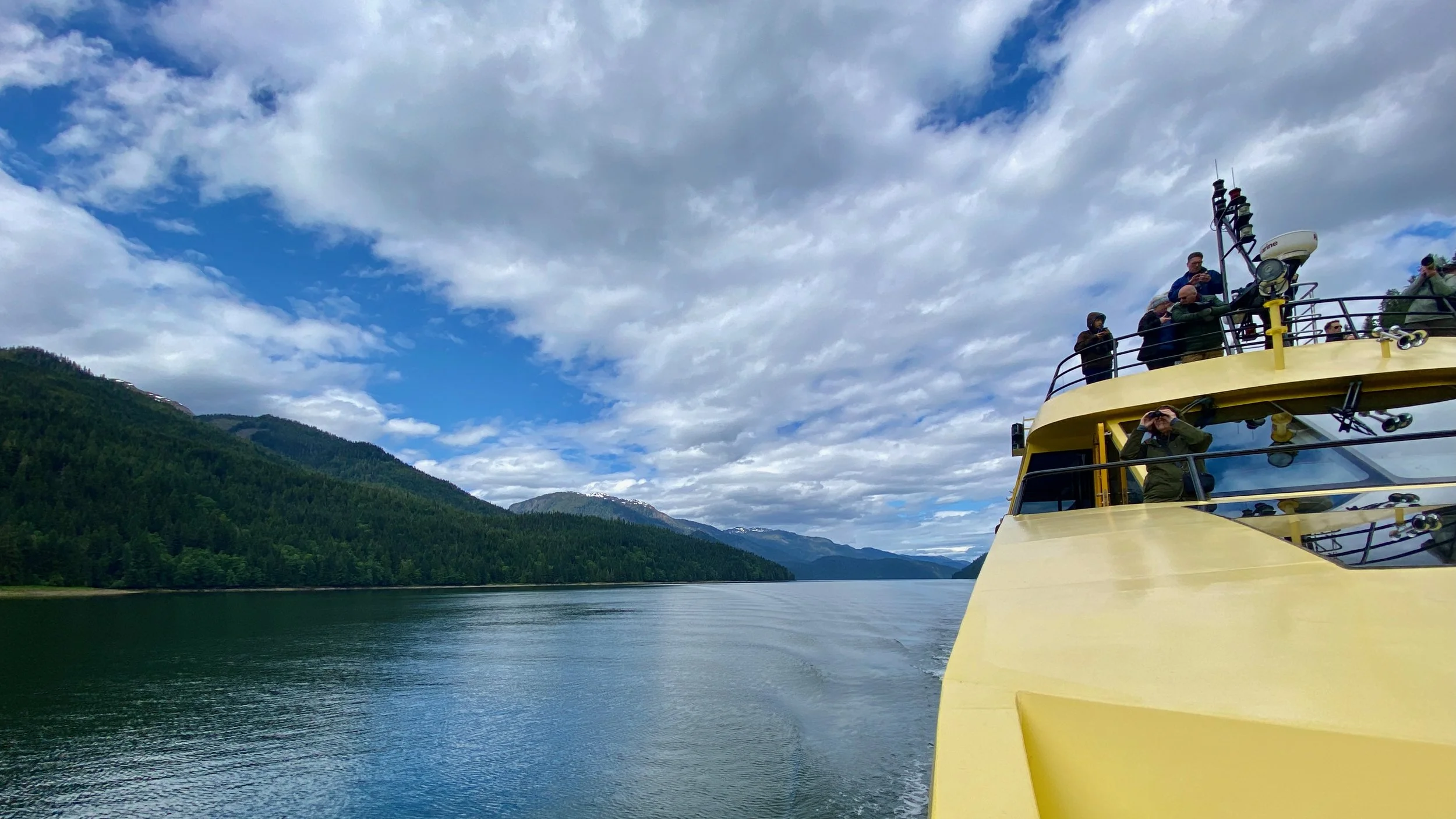
Views from the catamaran.
Beyond the Bears
Beyond the bears, the rich coastal waters and surrounding temperate rainforest provide a wonderful habitat for other photogenic animals. On land, mammals are occasionally tricky to spot, but careful scanning of the shores and cliffs allowed us to spot Black-tailed Deer and Mountain Goats.
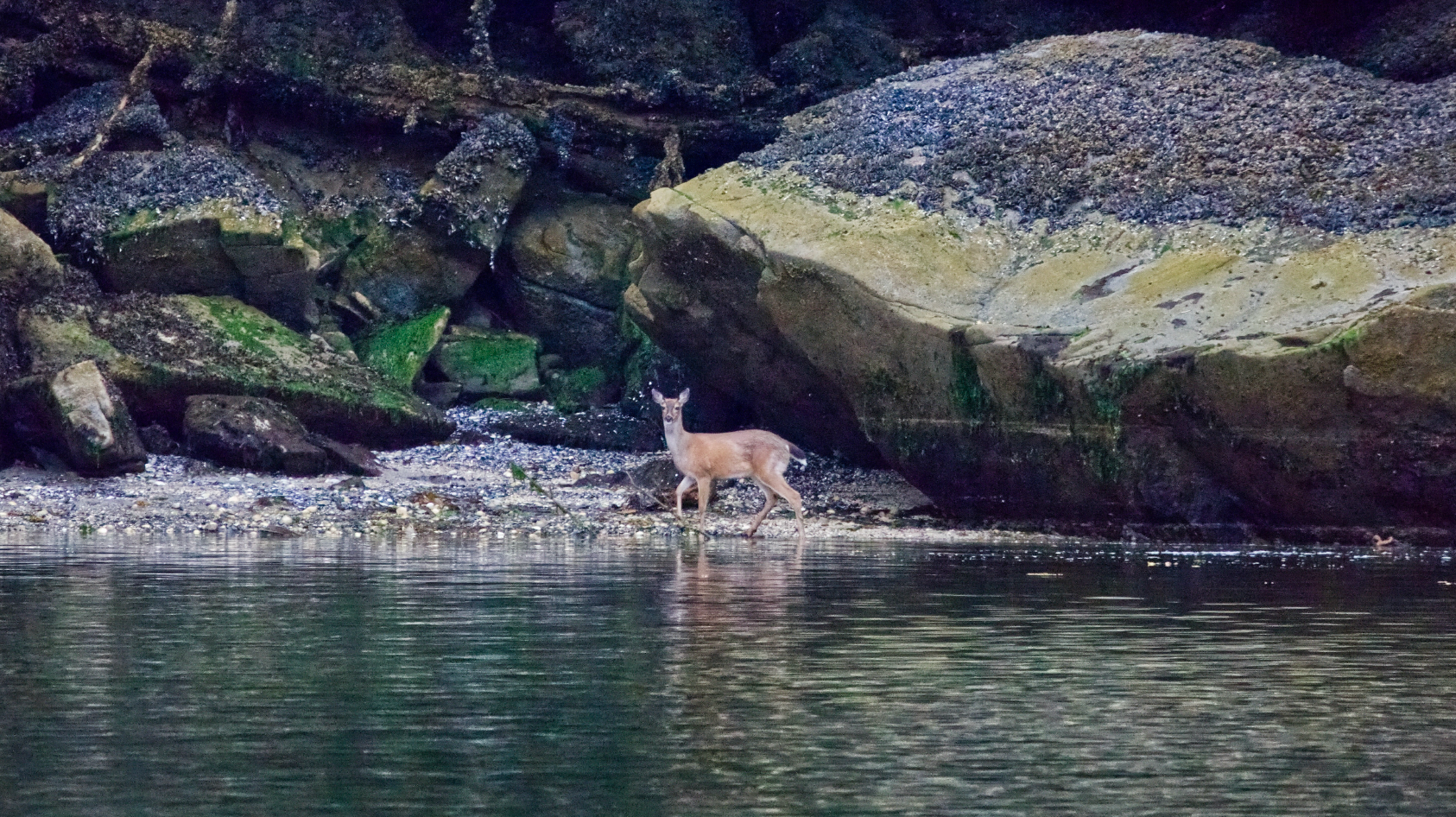
A Black-tailed Deer that briefly appeared on shore.
In the waters of the Work Channel, we were treated to a spectacular view of humpback whales and northern resident orcas. These charming cetaceans put on a great show, displaying many surfacing behaviours, such as skyhopping and lobtailing. Joining our selection of marine mammals were multiple groups of Harbour Seals. Seals are a common sight on small rocky islands and often make for cute photographs.
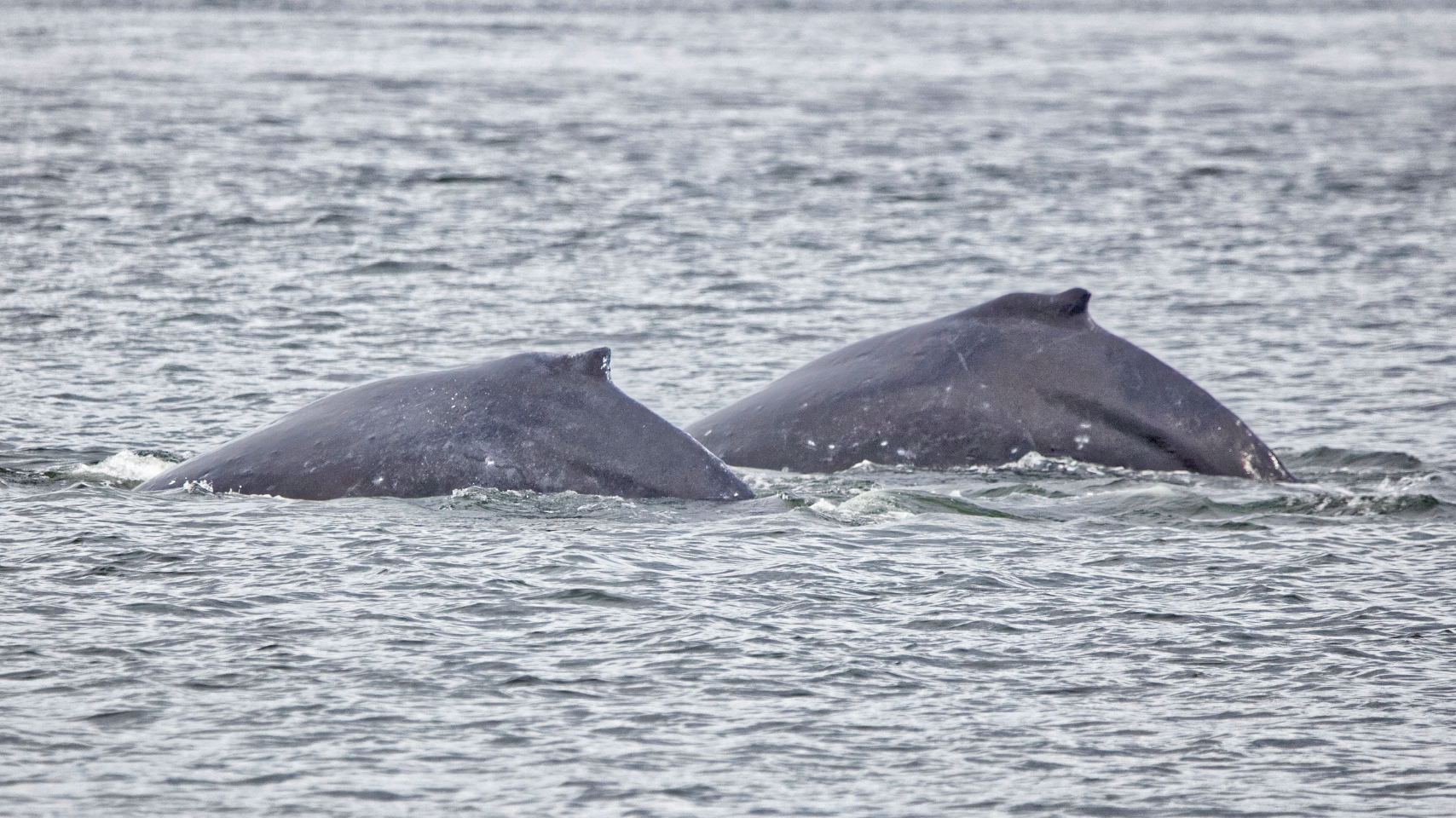
Humpback whales synchronised swimming.
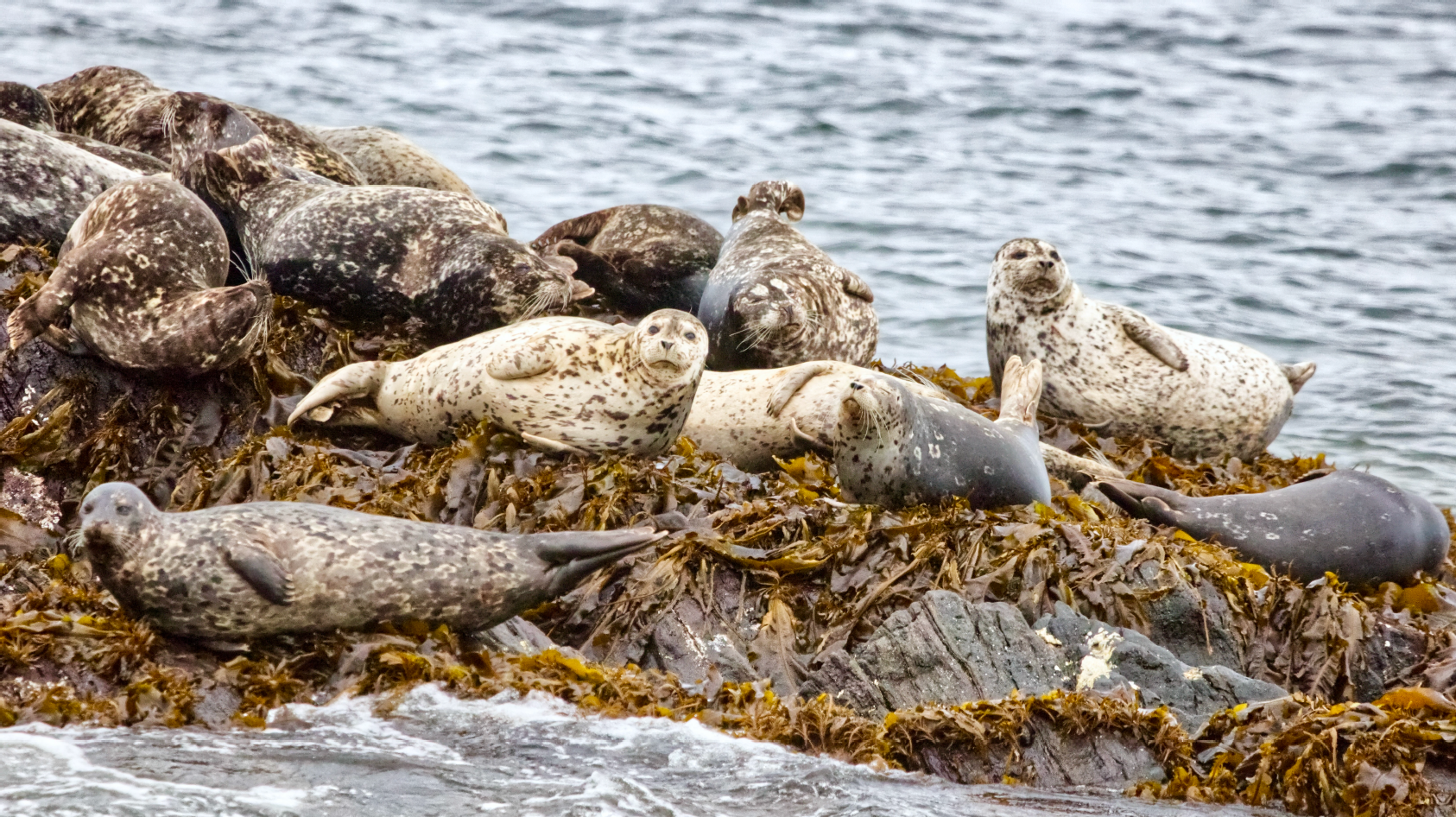
Harbour seals on a rocky outcrop.
Conquering the land, sky, and sea was a bewildering selection of birds with over 20 species documented on our single expedition day. Our bird list included Bald Eagles, Red-throated Loons, Harlequin Ducks, and Marbled Murrelets, which are endangered seabirds that nest exclusively in old-growth forests like those in the Khutzeymateen Grizzly Bear Sanctuary.
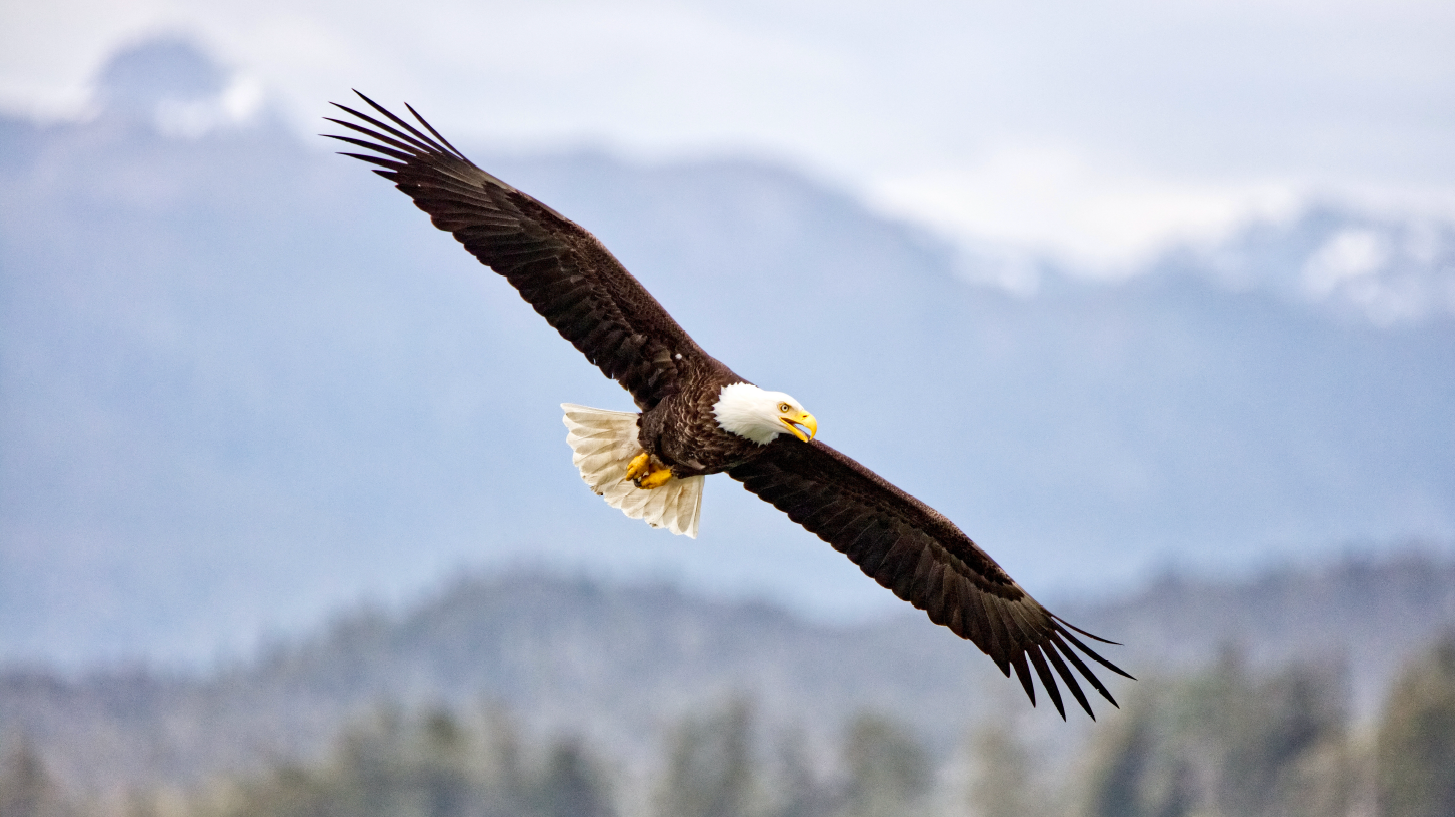
A Bald Eagle soaring in the coastal mountains.
Be sure to bring a camera along on your epic one-day journey into the Khutzeymateen Grizzly Bear Sanctuary. It’s an unforgettable experience that you’ll certainly want to capture.
Until next time,
Joel Weatherly, Wildlife Photographer
